
January 17, 2024
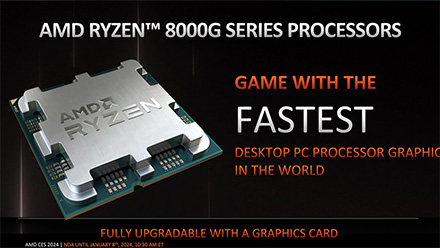
Las Vegas, Jan 8th 2024 - AMD announced their latest desktop processors, designed for boards with AM5 sockets.
The processors of most appeal to Mini-ITX aficionados will be their 8000G range, which include powerful built-in graphics on the die. The previous leader in this category is AMD’s own 5700G, which has been around since 2021.
Powerful socket processors with built-in graphics aren’t a new idea. Intel have included reasonable integrated graphics for years on most of their processors, and AMD’s more recent socket AM5 processors have all included integrated graphics. But the difference with AMD’s ‘G’ processors is the proportion of the die assigned to graphics is much greater than standard desktop socket processors.
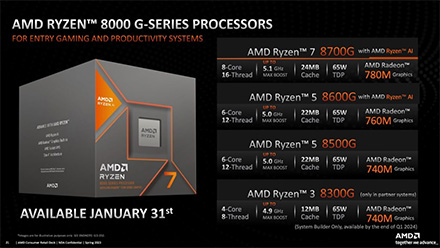
There are 3 processors of interest, plus another one you won’t be able to buy. The Ryzen 7 8700G is at the top of the heap with 8 Zen4 cores, 16 threads, 12 RDNA3 compute units and a Ryzen AI NPU. The Ryzen 5 8600G has 6 Zen4 cores, 12 threads, 8 RDNA3 compute units and the AI NPU. The Ryzen 3 8500G has 2 Zen4 cores and 4 efficient Zen4c cores, 12 threads and 4 RDNA3 compute units but no AI NPU. The Ryzen 3 8300G is a base level processor only available for OEM partners.
A standard ATX PC enclosure almost always supports a graphics card, whereas in the world of Mini-ITX there are many categories of case that don’t need to support them, relying instead on integrated graphics from the SoC or processor. This gives a wider range of form factors and smaller chassis size, and often come with power consumption benefits.
Delightful Mini-ITX enclosures supporting full-sized graphics cards clock in at around 10 litres in volume - but enclosures without GPU support can start at around 2.5 litres. With the new 8000G processors, the bar has been raised for how powerful these tiny machines can be. AMD say these processors will be available from Jan 31st 2024.
 Permalink | mini-link Permalink | mini-link |
Intel Hands Over the NUC Reins to ASUS
September 06, 2023
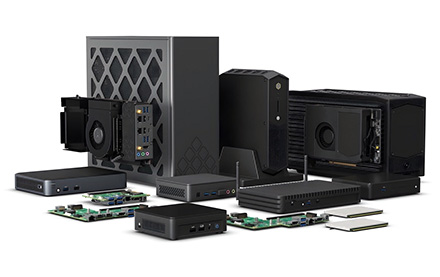
Intel has formally vacated its role in the development of its NUC (Next Unit of Compute) mini-PC series, redirecting its focus to its foundational semiconductor ventures. While Intel didn't pioneer the mini-PC—companies like Zotac had ventured into this space earlier—it did make significant contributions to popularising it. The task of continuing the NUC legacy has now been entrusted to ASUS, the electronics heavyweight from Taiwan.
Beginning on the 1st of September, ASUS will integrate the NUC series into its existing product range, embarking on what the company envisions as a "new, exhilarating journey." Importantly, ASUS has secured the rights to manufacture and provide support for Intel's 10th to 13th generation NUCs, as well as to develop new models under the NUC brand.
However, there's an intriguing twist: these rights are non-exclusive. This allows other tech vendors the opportunity to use the NUC name and IP, thus injecting an element of competition into the already vibrant mini-PC market.
It's worth noting that while the term 'NUC' may be associated with Intel, the concept of a mini-PC is not exclusive to any single company. Indeed, even as ASUS takes over the NUC branding, other vendors can (and do) produce similar small form-factor PCs without using the NUC name.
Intel's exit from the NUC segment is part of a broader strategic move to trim its portfolio, focusing on its primary revenue-generating operations. Shortly after announcing their exit, ASUS and Intel disclosed a term sheet outlining ASUS's role in producing and supporting Intel's 10th to 13th generation NUCs and crafting new NUC designs for the future.
While the specific details surrounding the transition are still forthcoming, the inclusion of ASUS in the NUC narrative certainly adds a new layer of intrigue to the ever-evolving mini-PC market. As this chapter in the NUC story unfolds, the tech industry watches with great interest, wondering which other players might enter this increasingly dynamic field.
| Permalink | mini-link |
NA500 Network Appliances now available
May 24, 2023
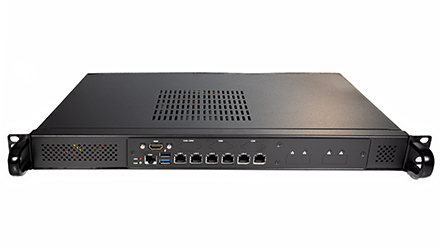
NA500 1U Short Depth 6x 2.5Gb LAN Server Appliances are now available from Mini-ITX.com as components or as fully built and tested systems with extended 3 year warranty.
The NA500 is a low power consumption system powered by a powerful 10W TDP, 4 Core, 4 Thread 2.0GHz (2.6GHz Burst) Intel Celeron J6412 processor with 6x Intel i225V Gigabit LAN ports (expandable to 10 ports with 4 additional i211AT Gigabit LAN ports), up to 32GB memory, 2.5in and M.2 Type 2242 (NVMe/SATA) drive bays.
The NA500 is compatible with a wide range of Linux and Windows operating systems, including pfSense, OPNSense, Ubuntu, CentOS, Debian, Fedora, and pretty much any other modern OS you can throw at it.
NA500 1U Network Server Appliances at Mini-ITX.com
| Permalink | mini-link |
Expanded range of Dynatron Coolers now available from Mini-ITX.com
February 08, 2023
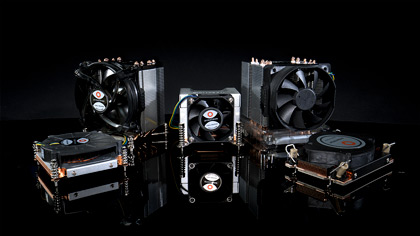
We have expanded our range of Dynatron Coolers to 20, covering a wide selection of AMD and Intel desktop, workstation and server sockets.
Sockets now covered include: AM4, AM5, sWRX8, TR4, SP3, 115X, 1200, 1700, 2011, 3647 and 4189.
Dynatron make a variety of cooler sizes to fit 1U, 2U and 3U, including 1U compatible all-in-one liquid coolers.
| Permalink | mini-link |
The Commodore 64x - modern Mini-ITX inside a retro enclosure
July 07, 2022
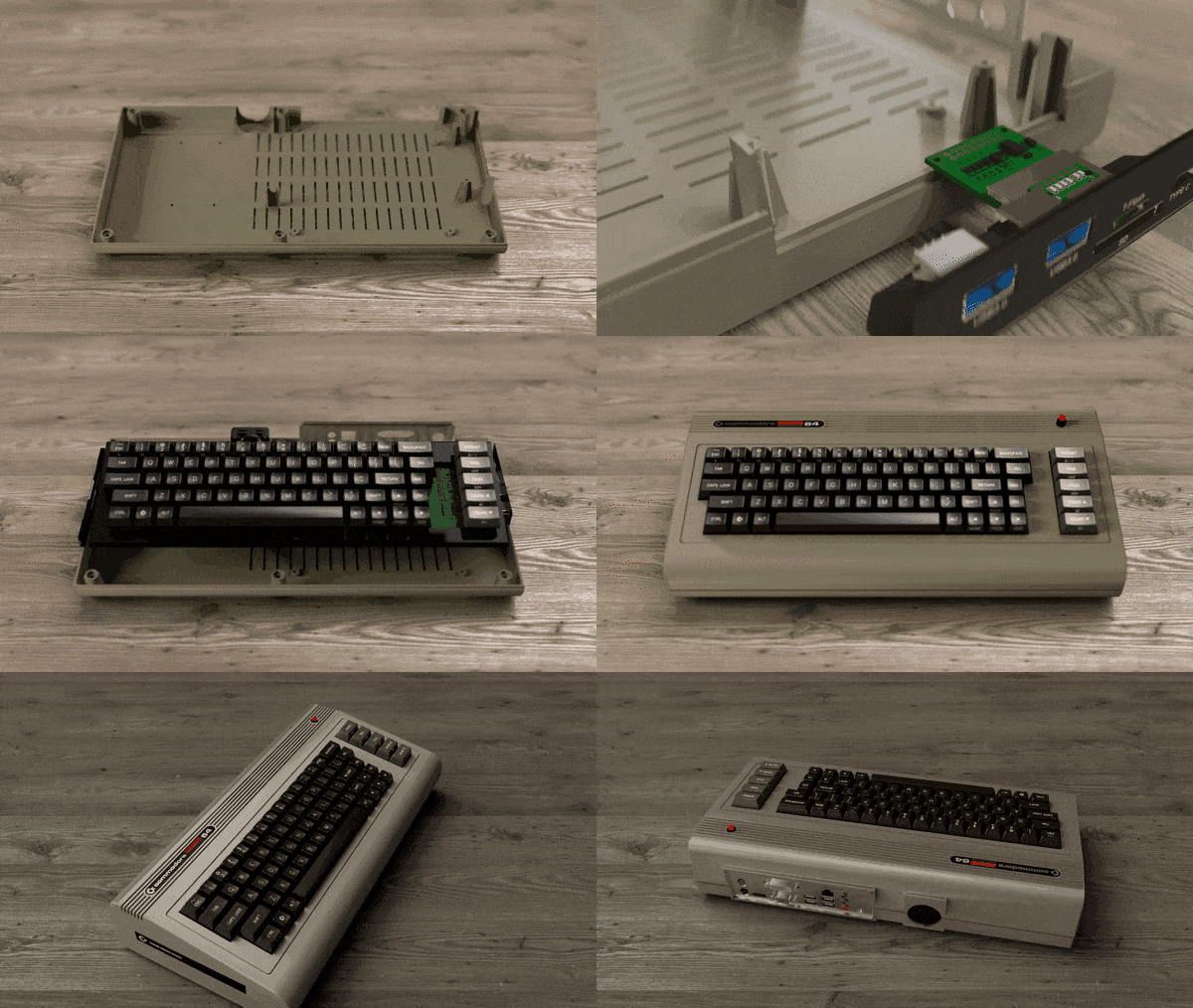
The Commodore C64 was an 8-bit home computer introduced in January 1982 by Commodore International. You can read the rest on Wikipedia. What you're really wondering is how can I build one today using a Mini-ITX motherboard and replica parts made from the original moulds created by Commodore USA back in 2011?
The answer is UK-based My Retro Computer Ltd and (if it hasn't finished by the time you read this) their Kickstarter for the Commodore C64x
If you're not a fan of the traditional Satin Beige colour scheme, there will be options for White, Purple, Red, Yellow, Pink, Green, Blue and even Translucent.
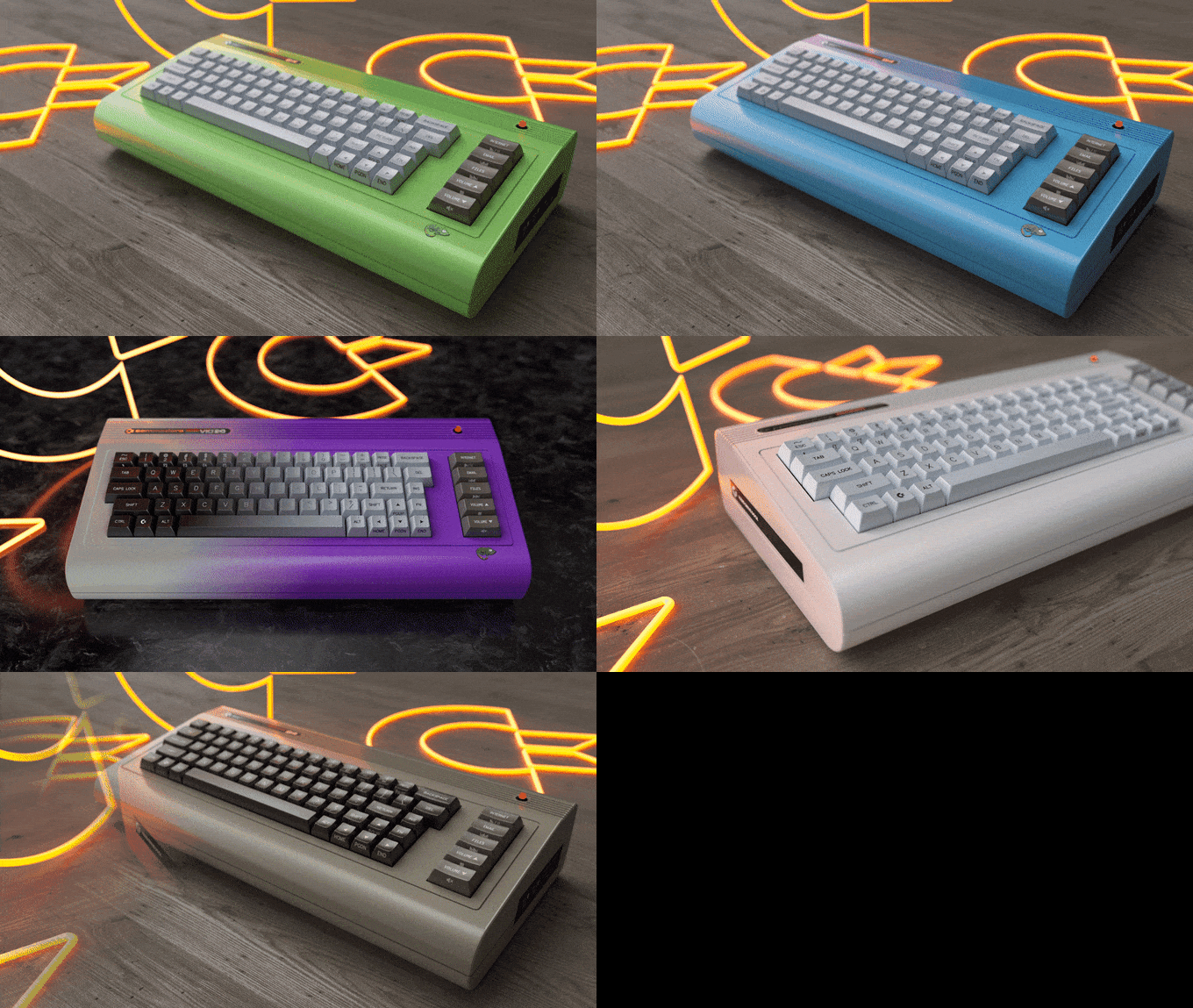
A barebones case is on offer for custom builds, together with a couple of pre-built versions. The 'Extreme' has a Celeron J6412 processor, whereas the 'Ultimate' has an i5 and GTX 1650. All within the constraints of the rather lovely C64 enclosure.
But the nostalgia doesn't stop there. Plans are afoot for a 24in retro Commodore monitor, together with celebratory Mugs, Mice and T-Shirts.
| Permalink | mini-link |
The Turing Pi V2 - now on Kickstarter
May 16, 2022
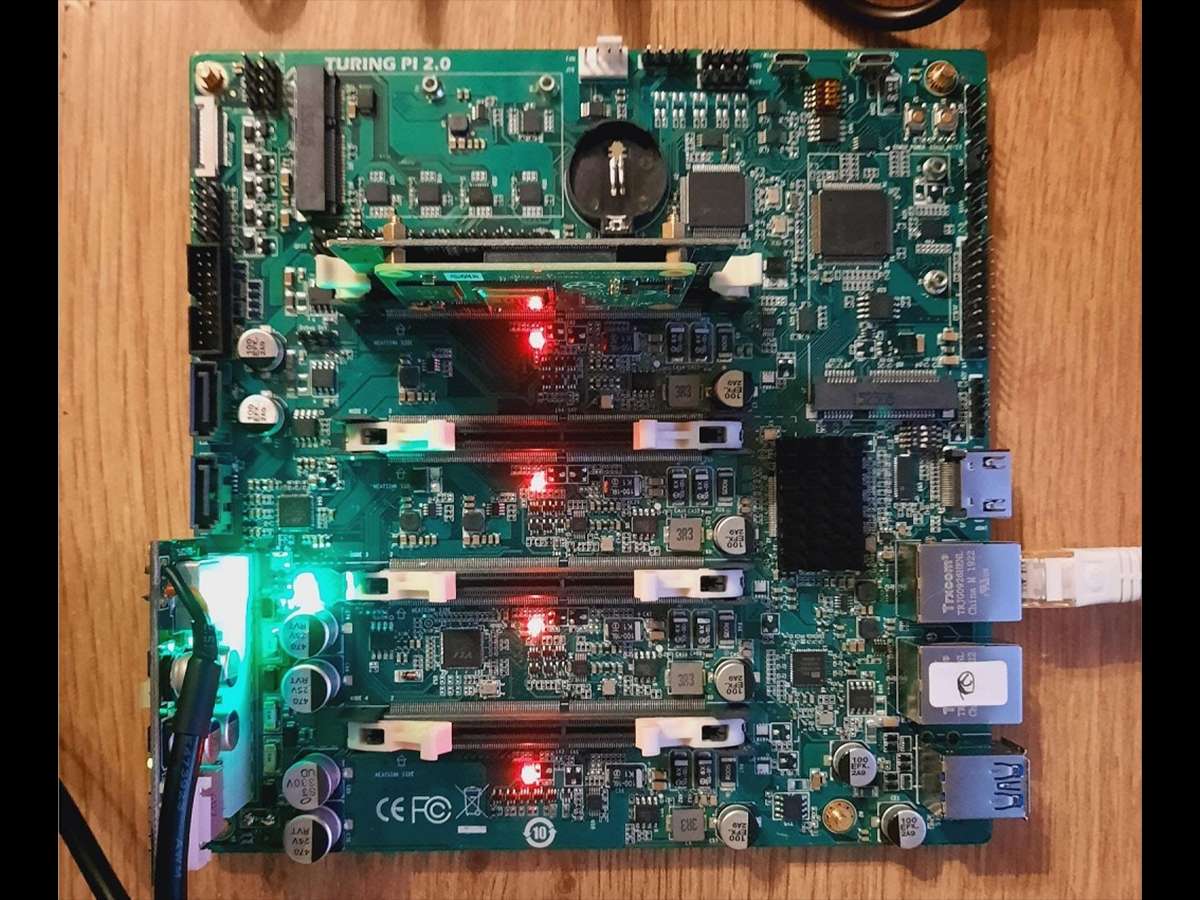
Turing Pi have announced further details of their second Mini-ITX sized Compute Module cluster board.
Compute modules are effectively tiny low power consumption computers. A module has a processor and memory, often flash storage and sometimes Wi-Fi, and not much else. Compute Modules lack connectivity, so are generally mounted on a carrier or IO board to provide a route to the outside world.
The Turing Pi V2 is a carrier board which connects and powers up to 4 Raspberry Pi CM4 or Nvidia Jetson compute modules together.
The board becomes a cluster when multiple modules are fitted, with each compute module functioning as a node within that cluster.
The clever stuff happens underneath.
2x Gigabit LAN ports sit on the back panel, with an internal 7-port switch with VLAN support connecting all the modules together.
A Baseboard Management Controller allows remote board diagnostics and cluster management. The BMC and its network run independently from the data plane.
External storage is supported with 2 SATA 6Gbps interfaces. There are plenty of other interfaces to connect between the modules: HDMI, 2x Mini PCIe, 2x SATA, 4x USB 3.0, 3x 40-pin GPIO, Audio etc.
With 4x Raspberry Pi CM4 pi4.8_x modules connected, a cluster would have 16 cores and 32GB of memory on tap.
The Turing Pi V2 has a standard 24-pin ATX power connector and 17x17cm Mini-ITX form factor, meaning almost all Mini-ITX cases and power supplies can be used to house the cluster.
Original announcement (Oct 2020)
Recent announcement (August 2021)
Kickstarter Page (May 2022)
| Permalink | mini-link |
AMD announce Ryzen 4000 "G " Series with Integrated Graphics
July 21, 2020
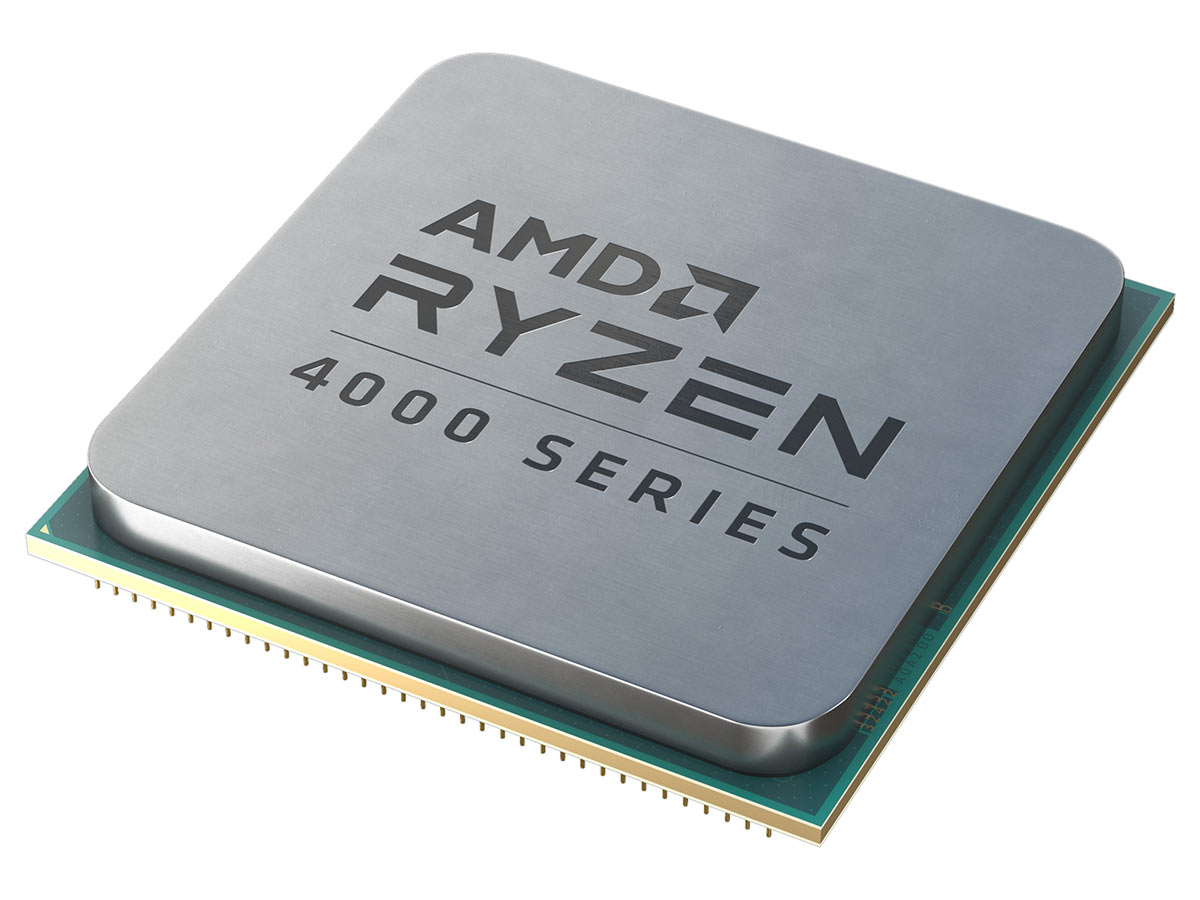
AMD announced today their Ryzen 4000-series desktop processors with integrated graphics.
These processors advance the designs of the already-released "Renoir" Ryzen 4000 mobile processors to 35W and 65W desktop power budgets.
Ryzen "G" processors are of particular interest to Mini-ITX aficionados as they do not require a separate graphics card, and therefore can use a much smaller enclosure and power supply.
The new CPUs include an 8 core 16 thread Ryzen 7 for the first time, whereas the previous generation only went to Ryzen 5.
The range consists of the Ryzen 3 4300G, Ryzen 5 4600G and Ryzen 7 4700G. These are all 65W TDP desktop CPUs. OEMs will have more choice for their Mini PCs with the 35W TDP, slightly slower clocked variants: The Ryzen 3 4300GE, Ryzen 5 4600GE and (yep) the Ryzen 7 4700GE.
| Cores | Threads | Base | Boost | Cache | GPU Cores | TDP | |
|---|---|---|---|---|---|---|---|
| Ryzen 7 4700G | 8 | 16 | 3.6GHz | 4.4GHz | 12MB | 8 | 65W |
| Ryzen 7 4700GE | 8 | 16 | 3.1GHz | 4.3GHz | 12MB | 8 | 35W |
| Ryzen 5 4600G | 6 | 12 | 3.7GHz | 4.2GHz | 11MB | 7 | 65W |
| Ryzen 5 4600GE | 6 | 12 | 3.3GHz | 4.2GHz | 11MB | 7 | 35W |
| Ryzen 3 4300G | 4 | 8 | 3.8GHz | 4.0GHz | 6MB | 6 | 65W |
| Ryzen 3 4300GE | 4 | 8 | 3.5GHz | 4.0GHz | 6MB | 6 | 35W |
"G" processors have been noticeably more powerful than their Intel equivalents recently and AMD's marketing materials suggest this trend continues, though they do rather sneakily compare against 9th generation Intel processors and not the latest 10th generation.
A Ryzen 3 4300G looks to be broadly equivalent to an i3-9100 in single-threaded and an i5-9500 in multi-threaded operation. A Ryzen 5 4600G could b considered to be like an i5-9500 (single threaded) and i7-9700 (multi threaded). The Ryzen 7 4700G measures faster than the i7-9700 however many cores are tested.
Graphic benchmarks are similarly impressive, with a Ryzen 7 4700G generating double or greater frame rates in popular games than an i7-9700. This is despite having fewer GPU cores than the previous generation Ryzen "G" - 6, 7 and 8 cores across the range instead of the previous 8 and 11. If you are in the market in a few weeks for the best integrated graphics possible in a Mini-ITX machine without a graphics card the Ryzen 7 4700G will be your CPU of choice - if you can get one. The downside is these processors are targetted at the OEM market, and will not be available very widely in retail.
| Permalink | mini-link |
ASRock built a Mini-ITX sized RX 570 with Thunderbolt 3
June 11, 2019
On display at Computex 2019 was a interesting Mini-ITX sized product (currently) in a brand new category of its own.
The ASRock RX570TM-ITX/TBT comprises of a Mini-ITX sized motherboard with an RX570 GPU and various connectors on its IO panel.
But this is not a Mini-ITX motherboard. There is no CPU socket. The key connector here is Thunderbolt 3.
This board is designed primarily for manufacturers and integrators to build their own external Thunderbolt enclosure.
Essentially - Thunderbolt from a laptop or PC goes in one end; graphics, storage and networking connectors come out of the other.
ASRock displayed the unit in two formats.
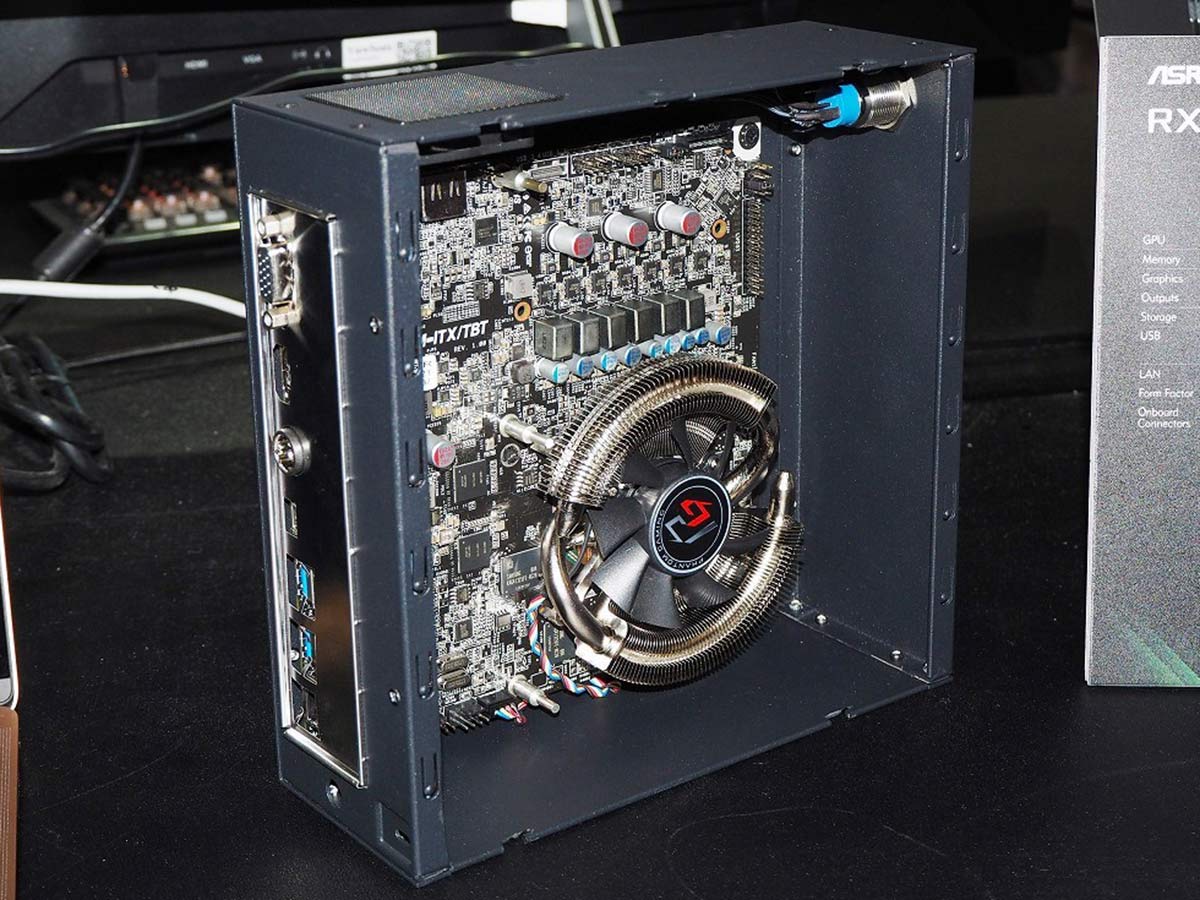
The first was a one-off Mini-ITX enclosure courtesy of Coolermaster, with a traditional IO shield on one side and power button on the other. This would fit between your monitor(s) and your laptop or PC.
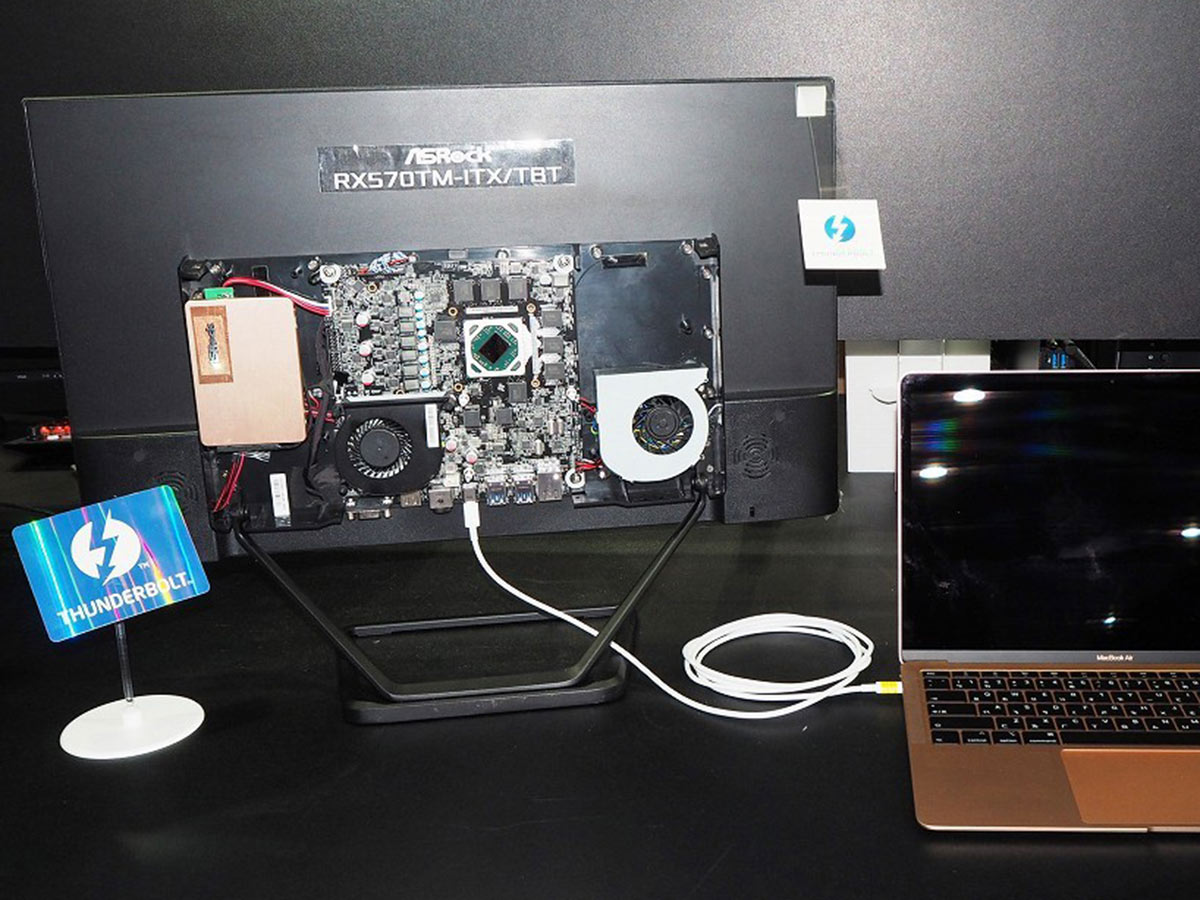
The second looked like an All In One PC with the board attached to the rear of a large Display. By connecting a laptop or PC through Thunderbolt you effectively get a monitor with built-in graphics acceleration and additional storage and connectivity.
The unit is powered by an external AC Adapter, with Thunderbolt allowing power transfer back to keep a laptop charged up.
The small size and Mini-ITX format has advantages. The RX 570 is a lower end GPU with relatively low (for a graphics card) power requirements at around 120W. It can be kept cool inside a relatively small space. If the unit makes it out into consumer territory as a standalone board - and there is no guarantee whatsoever that it will - it could be fitted into a standard Mini-ITX enclosure, perhaps next to another Mini-ITX enclosure housing the main PC.

Provisional specifications
- Radeon RX 570 with 4GB or 8GB GDDR5
- Thunderbolt 3
- 2x HDMI, VGA, LVDS
- 19V DC-In
- 4x USB 3.2 Gen1
- Gigabit Ethernet
- SATA 6Gb/s
Source: hermitage akihabara
| Permalink | mini-link |
ASRock fills out range of 8th Gen Core Intel 'Coffee Lake' Mini-ITX boards
April 26, 2018
Recently, Intel announced 3 new 8th Gen Core chipsets aimed at the lower end of the market, sitting below the already established Z370. Those new chipsets are the H370, B360 and H310. Features such as the number of available PCI-E and IO lanes reduce as you step down through the range - although Intel did manage to bake in support for USB 3.1 Gen2 into the H370 and B360. For the uninitiated, USB 3.1 Gen1 is half the speed of Gen2, and is what we now have to call USB 3.0, according to the powers that be.
Full chipset comparison on Intel ARK for nerds
The cost of a chipset reflects on the cost of a motherboard and that way, we get a motherboard for every segment and price budget.
ASRock has been working hard to produce motherboards for all these chipsets.
Z370M-ITX/ac
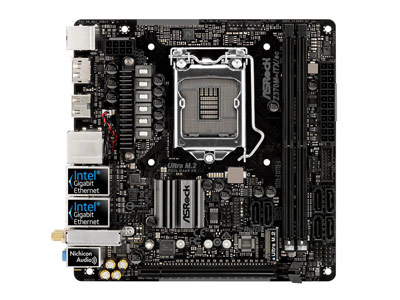
- CPU and Memory Overclocking with 'K' CPUs
- 6 SATA III ports
- 1 Ultra M.2 (PCIe Gen3 x4 up to 32Gb/s) connector
- 6 rear & 2 header USB 3.1 Gen1 ports
- Maximum memory capacity of 32GB
- Dual Intel Gigabit LAN
- Intel 802.11ac WI-FI and BT 4.2
- Z370M-ITX/ac at Mini-ITX Store
H370M-ITX/ac
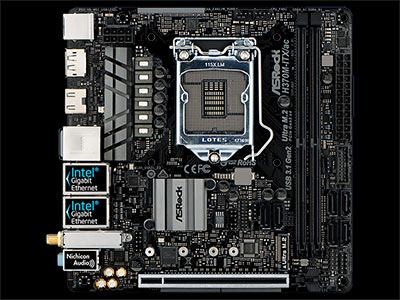
- 6 SATA III ports
- 1 Ultra M.2 (PCIe Gen3 x4 up to 32Gb/s) connector
- 4 rear USB 3.1 Gen2 10Gb/s ports
- 2 rear and 2 header USB 3.1 Gen1 ports
- Maximum memory capacity of 32GB
- Dual Intel Gigabit LAN
- Intel 802.11ac WI-FI and BT 4.2
- H370M-ITX/ac at Mini-ITX Store
B360M-ITX/ac
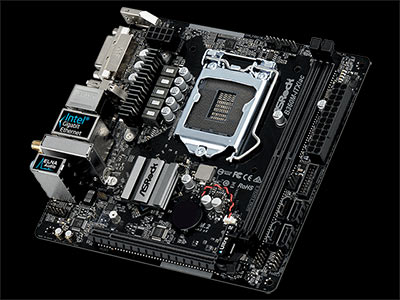
- 4 SATA III ports
- 1 Ultra M.2 (PCIe Gen3 x4 up to 32Gb/s) connector
- 2 rear USB 3.1 Gen2 10Gb/s ports
- 2 rear & 2 header USB 3.1 Gen1 ports
- Maximum memory capacity of 32GB
- Intel Gigabit LAN port
- Intel 802.11ac WI-FI and BT 4.2
- B360M-ITX/ac at Mini-ITX Store
H310M-ITX/ac
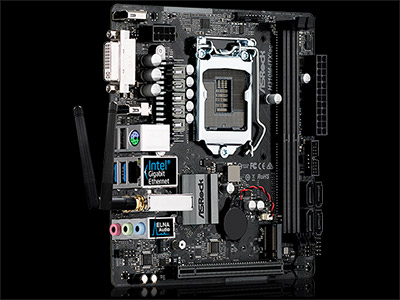
- 4 SATA III ports
- 1 M.2 (PCIe Gen2 x4 up to 20Gb/s) connector
- 2 rear and 2 header USB 3.1 Gen1 ports
- Maximum memory capacity of 32GB
- Intel Gigabit LAN port
- Intel 802.11ac WI-FI and BT 4.2
- H310M-ITX/ac at Mini-ITX Store
| Permalink | mini-link |
Intel Atom C3958 gets benchmarked on GIGABYTE's MA10 motherboard
October 09, 2017
By Aleksandar Kostovic
We previously covered the release of GIGABYTE's MA10 motherboard and we were impressed by the features it offers.
The Atom C3958 it uses is a fully fledged server-grade SoC with 16 cores each clocked at 2.0GHz with 1MB of L2 cache per core. It features Intel's QuickAssist Technology (QAT) which is their name for a whole range of hardware-assisted crypto acceleration and compression tools designed to secure and route internet traffic.
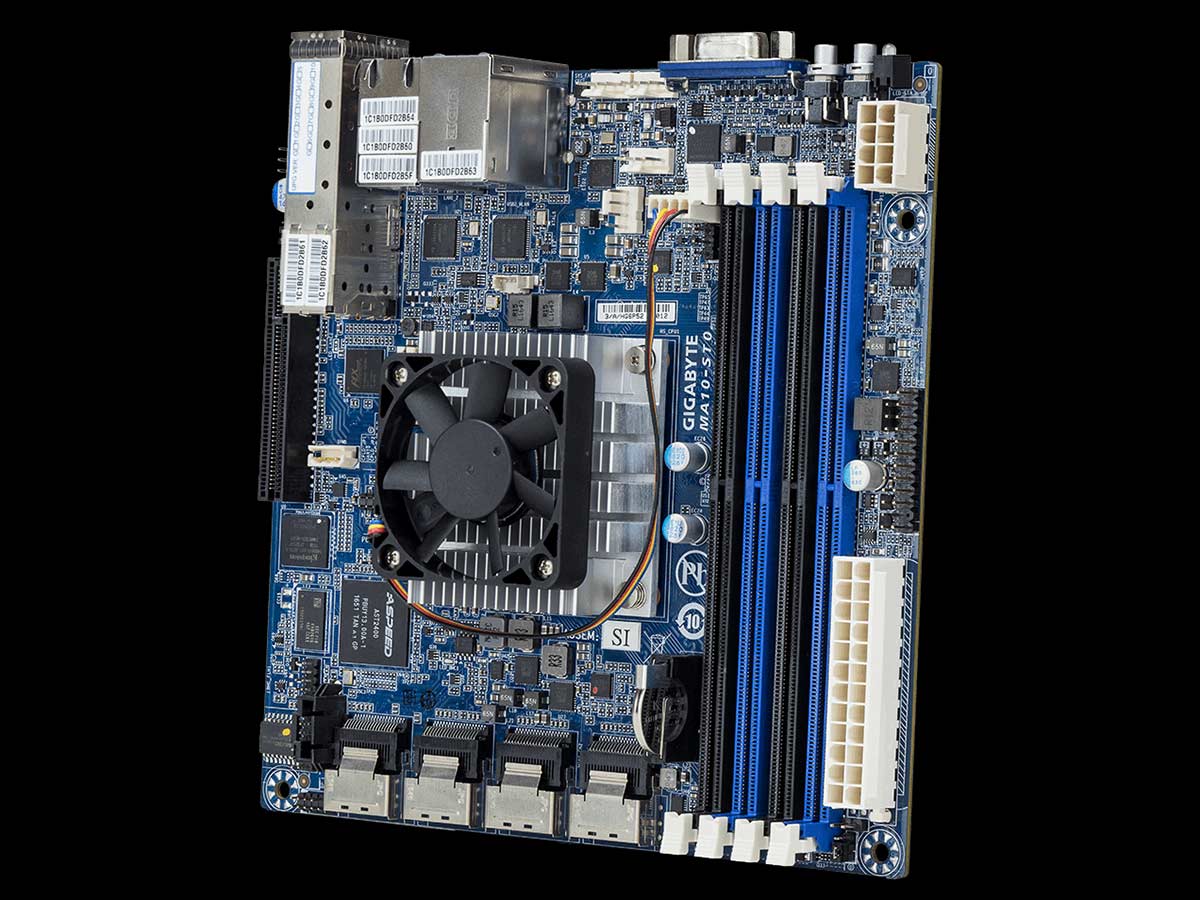
Now, we have benchmarks under Linux OS thanks to the guys over at ServeTheHome.
The test was done with the following setup:
- GIGABYTE MA10-ST0 (with Intel Atom C3958 CPU)
- 64GB of Micron Ram running at 2400MHz
- Intel DC3710 400Gb SSD
- Intel DC3700 200GB used as boot device
After running eight different benchmarks, the Atom C3958 outperformed the last gen C2758 by a landslide. It managed to beat it due to increased instructions per cycle and the higher core count (from 8 to 16).
If you want to see the full benchmarks and to read more info about Intel's QuickAssist functionality, we recommend you visit ServeTheHome.
| Permalink | mini-link |
 |
 |
 |
Quick Links
Mailing Lists:
Mini-ITX Store
Projects:
Show Random
Accordion-ITX
Aircraft Carrier
Ambulator 1
AMD Case
Ammo Box
Ammo Tux
AmmoLAN
amPC
Animal SNES
Atari 800 ITX
Attache Server
Aunt Hagar's Mini-ITX
Bantam PC
BBC ITX B
Bender PC
Biscuit Tin PC
Blue Plate
BlueBox
BMW PC
Borg Appliance
Briefcase PC
Bubbacomp
C1541 Disk Drive
C64 @ 933MHz
CardboardCube
CAUV 2008
CBM ITX-64
Coelacanth-PC
Cool Cube
Deco Box
Devilcat
DOS Head Unit
Dreamcast PC
E.T.PC
Eden VAX
EdenStation IPX
Encyclomedia
Falcon-ITX
Florian
Frame
FS-RouterSwitch
G4 Cube PC
GasCan PC
Gingerbread
Gramaphone-ITX-HD
GTA-PC
Guitar PC
Guitar Workstation
Gumball PC
Hirschmann
HTPC
HTPC2
Humidor 64
Humidor CL
Humidor II
Humidor M
Humidor PC
Humidor V
I.C.E. Unit
i64XBOX
i-EPIA
iGrill
ITX Helmet
ITX TV
ITX-Laptop
Jeannie
Jukebox ITX
KiSA 444
K'nex ITX
Leela PC
Lego 0933 PC
Legobox
Log Cabin PC
Lunchbox PC
Mac-ITX
Manga Doll
Mantle Radio
Mediabox
Mega-ITX
Micro TV
Mini Falcon
Mini Mesh Box
Mini-Cluster
Mobile-BlackBox
Moo Cow Moo
Mr OMNI
NAS4Free
NESPC
OpenELEC
Osh Kosh
Pet ITX
Pictureframe PC
Playstation 2 PC
Playstation PC
Project NFF
PSU PC
Quiet Cubid
R2D2PC
Racing The Light
RadioSphere
Restomod TV
Robotica 2003
Rundfunker
SaturnPC
S-CUBE
SEGA-ITX
SpaceCase
SpacePanel
Spartan Bluebird
Spider Case
Supra-Server
Teddybear
Telefunken 2003
TERA-ITX
The Clock
ToAsTOr
Tortoise Beetle
Tux Server
Underwood No.5
Waffle Iron PC
Windows XP Box
Wraith SE/30
XBMC-ION